Plenary & Keynote Speakers
8th International Conference on Statistics: Theory and Applications (ICSTA 2026)

Dr. Christophe Ley
University of Luxembourg, Luxembourg
Plenary Speaker
Christophe Ley is Chair of Applied Statistics in Actuarial Sciences at the University of Luxembourg and co-founder of GrewIA, a company offering comprehensive tailor-made training and innovative consulting solutions in Artificial Intelligence and Data Science. He is currently also Editor-in-Chief of the Journal of Sports Analytics. Among his main achievements are the Bernoulli Prize in 2024, a Teaching Award at the University of Luxembourg in 2024, and the 2014 Marie-Jeanne Laurent-Duhamel Prize for the best PhD thesis in statistics among all french-speaking universities worldwide over a period of three years.

Dr. Marian Scott
University of Glasgow, UK
Plenary Speaker
Scott has a degree in statistics and a PhD from the University of Glasgow. Her thesis was on the sources of error in radiocarbon dating, and was supervised by Murdoch Baxter and Tom Aitchison. Her research interests include model uncertainty and sensitivity analysis, modelling how pollutants disperse in the environment, radiocarbon dating and assessing animal welfare. In 2005, Scott was elected a Fellow of the Royal Society of Edinburgh (FRSE), Scotland's national academy of science and letters. In the 2009 Queen's Birthday Honours, she was appointed an Officer of the Order of the British Empire (OBE) for services to social science. Professor Scott was awarded the Royal Statistical Society Barnett Award in 2019 for "her outstanding, pioneering research into the application of innovative statistical techniques to environmental issues."

Dr. Chase Qishi Wu
New Jersey Institute of Technology, USA
Plenary Speaker
Chase Wu is a professor and the associate chair in Department of Data Science. His work has been supported by various funding agencies, including NSF, DOE, DHS, and ORNL, where he is a collaborative research staff. He has published over 300 research articles in highly reputed conference proceedings, journals, and books.
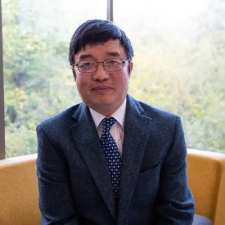
Dr. Shaomin Wu
University of Kent, UK
Plenary Speaker
Shaomin Wu earned both an MSc and a doctoral degree in applied statistics. He subsequently worked for a leading global manufacturer in Shanghai for five and a half years before relocating to the UK in 2001. His first two roles in the UK were as postdoctoral research fellows, focusing on machine learning and reliability mathematics, respectively. He then served as a lecturer in risk and decision analysis at Cranfield University. In 2012, he was appointed senior lecturer in business/applied statistics at Kent Business School, became a reader in 2013, and was promoted to professor in 2018.
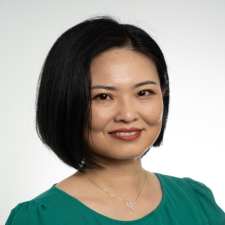
Dr. Cici Bauer
University of Texas Health Science Center at Houston, USA
Keynote Speaker
Shaomin Wu earned both an MSc and a doctoral degree in applied statistics. He subsequently worked for a leading global manufacturer in Shanghai for five and a half years before relocating to the UK in 2001. His first two roles in the UK were as postdoctoral research fellows, focusing on machine learning and reliability mathematics, respectively. He then served as a lecturer in risk and decision analysis at Cranfield University. In 2012, he was appointed senior lecturer in business/applied statistics at Kent Business School, became a reader in 2013, and was promoted to professor in 2018.
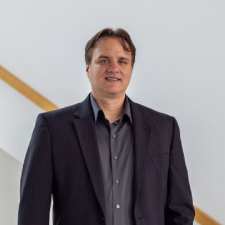
Dr. Marc Ratkovic
University of Mannheim, Germany
Keynote Speaker
Statistics, political science, computer science – Prof. Marc Ratkovic, PhD, has a wide range of research interests. And his career path was anything but linear: After graduating from college, he initially worked as a teacher at a New York middle school for three years, followed by a stint as a commercial real estate broker. Born and raised in the US, Ratkovic made some sharp turns before he settled in academia – and from the outset, he did not want to commit to one discipline. As an assistant professor and lecturer at Princeton University, he explored machine learning in the social sciences, for example. His research there focused on so-called causal inference, that is, methods for drawing reliable causal inference from observational data. His work in this field has been frequently cited in academic journals and won prizes and grants totaling some 850,000 US dollars. Based on more than one billion observations, Ratkovic could show, for example, that a government’s decision to engage in trade is heavily driven by political, rather than economic, considerations. And that such a decision predominantly depends on a country’s openness towards free-trade zones. After twelve years at Princeton, Ratkovic moved to the University of Mannheim in September 2023. “I came here to build something new and innovative,” he says. He conceives his current project as a service for other researchers, eventually providing them with a quarterly, automated summary of the research output in their own area of expertise. For that purpose, hundreds of thousands of political science articles will be brought to Mannheim. Right now, he is busy building up the server needed for such an endeavor. “It will help my colleagues stay up to date in their research area,” Ratkovic explains. In addition, he is working to advance his own research on language models and tries to find ways of connecting them with basic statistical methods.